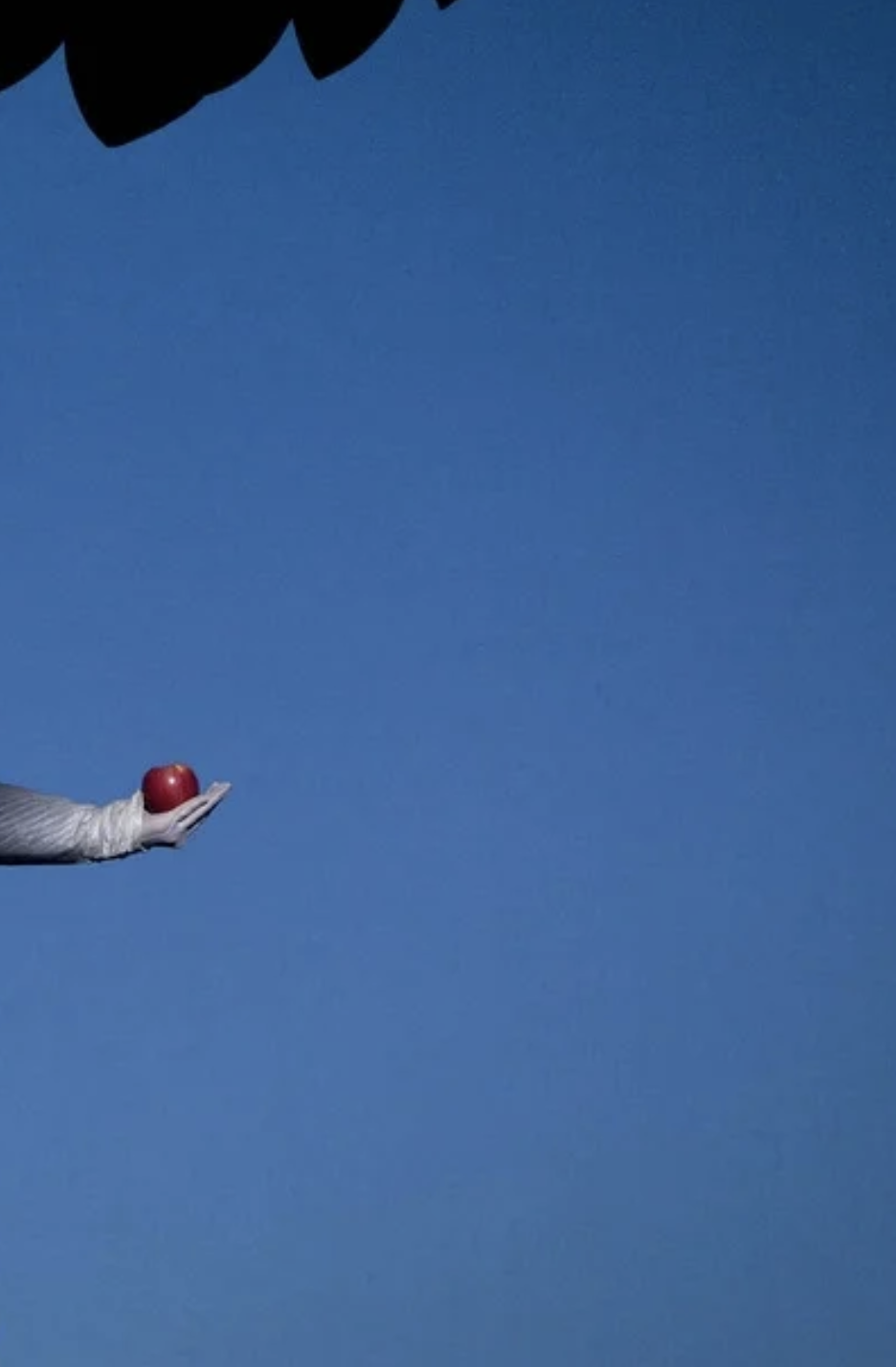
Sonnet 66
for voice, electronics, incorporating American Sign Language
Full Video
by Ty Bouque, New York 2025
Sonnet 66 reimagines Shakespeare’s poem through a performance that brings together voice, electronics, and embodied gesture. The work unfolds as a dialogue between sound and movement, examining the poem’s themes of injustice, exhaustion, and moral collapse through a focused audiovisual structure.
A central feature of the piece is its use of American Sign Language (ASL) as an integral musical layer. Working closely with a sign-language interpreter, Yue designs each gesture to interact with the vocal line in rhythm, pacing, and meaning. This creates a visual counterpoint that offers an additional mode of presenting the text, allowing the poem to be “heard” and “seen” at the same time.
The electronic design introduces multiple layers of vocal material—warping, distorting, and reversing selected phrases to suggest fragmented memory and the inevitability implied by repeated words such as death. An invisible cello, inspired by The Emperor’s New Clothes, functions as a metaphor for power, illusion, and sound without a visible source. The staging also includes a mirror positioned at a specific angle, allowing only certain audience members to clearly see the performer’s gestures after they turn away. This selective visibility serves as a commentary on social privilege and unequal access to information. Through these real and imagined elements, the work creates a shifting space in which perception and memory are continuously reframed.
Text
Tir’d with all these, for restful death I cry,
As, to behold desert a beggar born,
And needy nothing trimm’d in jollity,
And purest faith unhappily forsworn,
And gilded honour shamefully misplac’d,
And maiden virtue rudely strumpeted,
And right perfection wrongfully disgrac’d,
And strength by limping sway disabled,
And art made tongue-tied by authority,
And folly, doctor-like, controlling skill,
And simple truth miscall’d simplicity,
And captive good attending captain ill.
Tir’d with all these, from these would I be gone,
Save that, to die, I leave my love alone.
Stage Setting
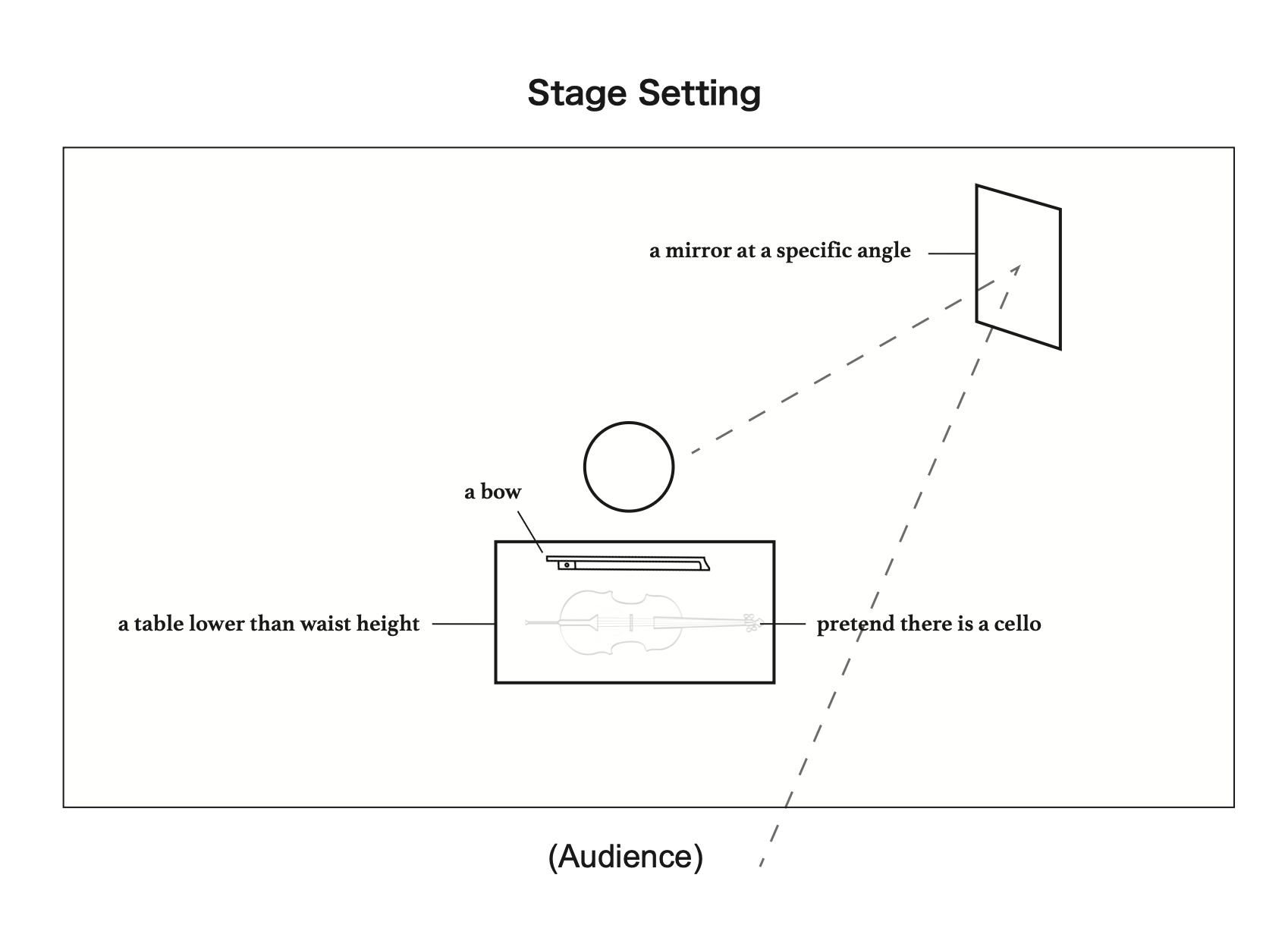
• Table Setup & Imaginary Cello Concept
A table is placed in front of the performer, either to the left or right, depending on their preference, with a recommended height between thigh and waist level. A string instrument bow is placed near the edge of the table, leaving the center empty to imply an invisible cello. The performer uses the bow to enact cello-bowing gestures along the imagined instrument.
• Performer–Mirror Interaction
A standing mirror is positioned behind the performer on either the left-rear or right-rear side. Its angle should be set so that audiences in specific seating areas can observe the performer’s movements through the mirror.
• Choreographed Facing & Visual Alignment
When the performer turns toward the mirror, they should face it directly, creating a clear reflected view of the gesture work for the designated audience area.
Sign Language
ASL interpreted by Daisy A.
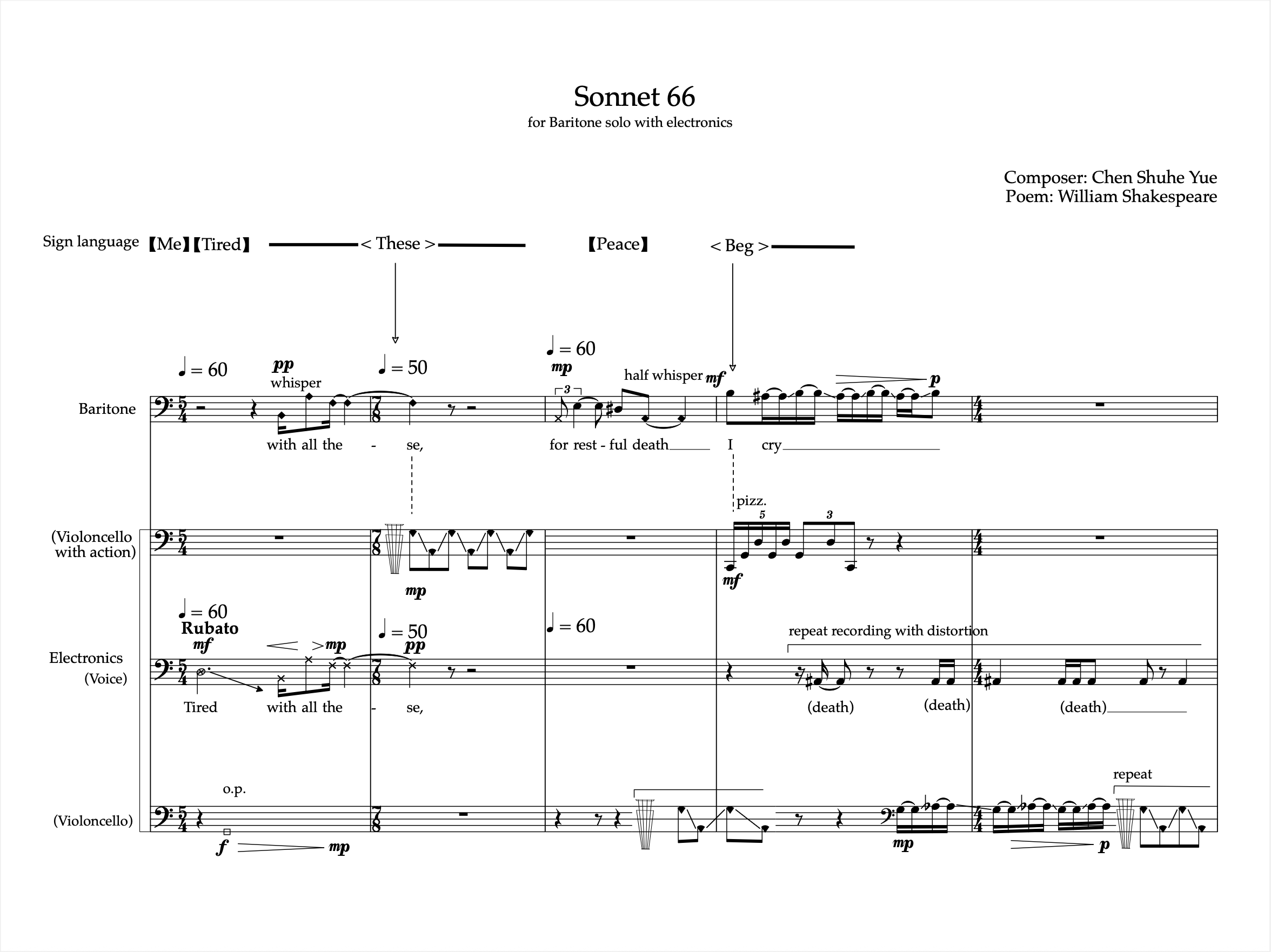
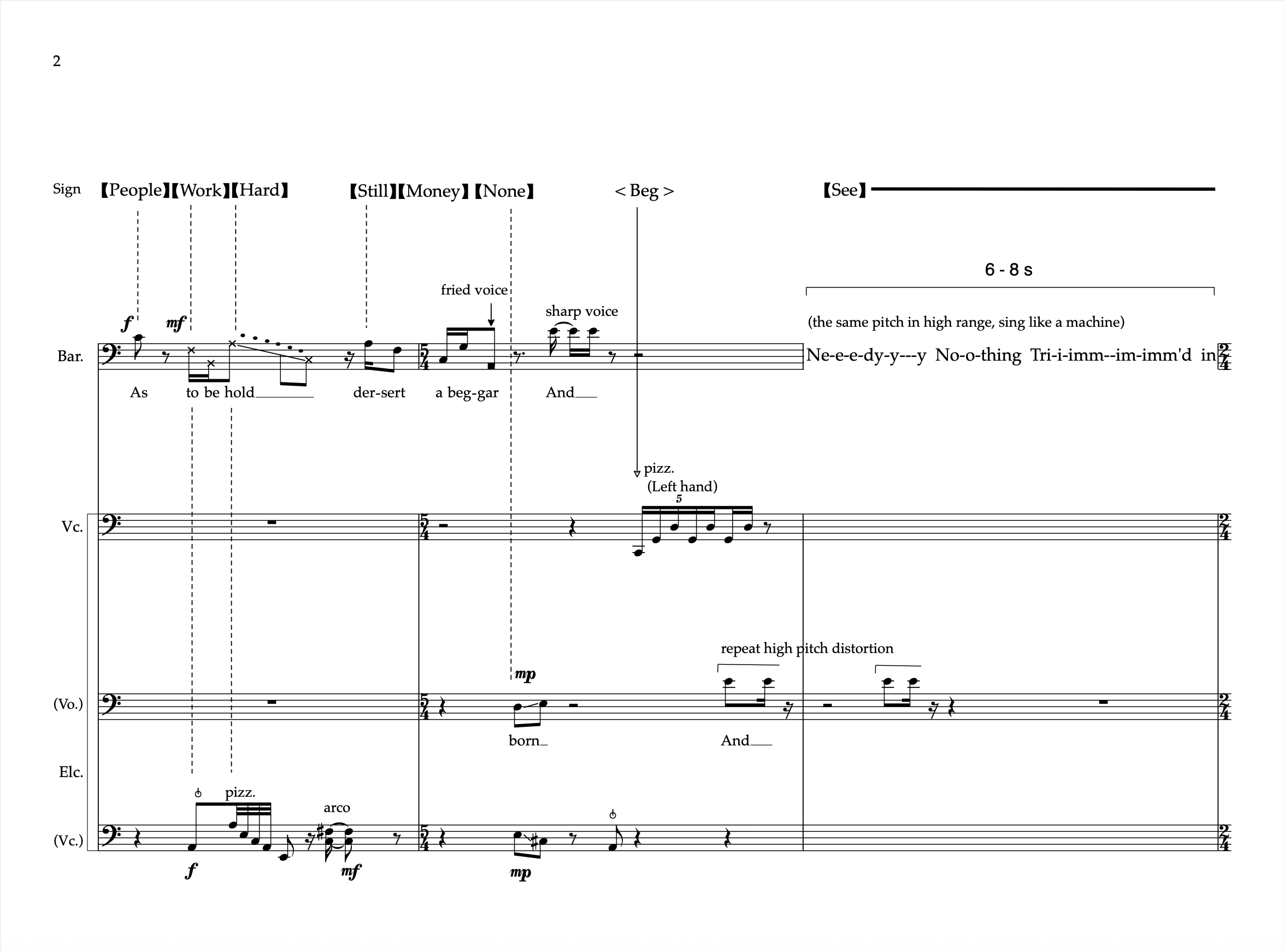
The signing must align precisely with the indicated vocal part, and in the section that occurs with the “Violoncello with actions,” the gestures should be repeated according to the rhythmic structure of the sound materials.
Electronics
Electronic Sound Sources & Structure
All electronic sound materials are derived entirely from pre-recorded vocals and cello.
The cello recordings were performed and recorded by Chenyi Hu.
Three lines of notation (in score order)
• Cello with Action
This line serves primarily to indicate the points where the sound materials must align with specific sign gestures. In strictly notated passages, the alignment between gesture and sound should be precise. In graphic-notation sections, partial or flexible alignment is acceptable, though the overall correspondence should still be maintained.
• Voice
The vocal electronic layer is created from edited fragments of pre-recorded singing. These materials are reshaped and repeated through various forms of distortion, and at times form a duet-like dialogue with the live voice.
• Cello
The pre-recorded cello in this section is used entirely as playback.