Pinocchio’s Nose
For Bassoon solo (with 4 air pedals and a bell)
2 min excerpt
Full video
Pinocchio’s Nose takes its inspiration from the story of Pinocchio and a film of the same name, using them as metaphors to examine the nature of truth and lies. In the film, a grieving father sees the wooden puppet as his lost child, and Pinocchio, hoping to please him, tries to perform himself into becoming a real person. Both act out of love, yet together construct a shared lie before eventually confronting the truth.
The composition centers on the bassoon and a network of air-driven instruments, following Pinocchio’s efforts to speak, to imitate human behavior, and to earn affection. Each breath and gesture traces how small, well-intentioned falsehoods accumulate and shape one’s identity. Through sounds, fragmented speech, and the physical act of inflating balloons, the work reflects on how lies leave lasting marks, even when they arise from longing and are ultimately forgiven.
Preparation and Stage setting
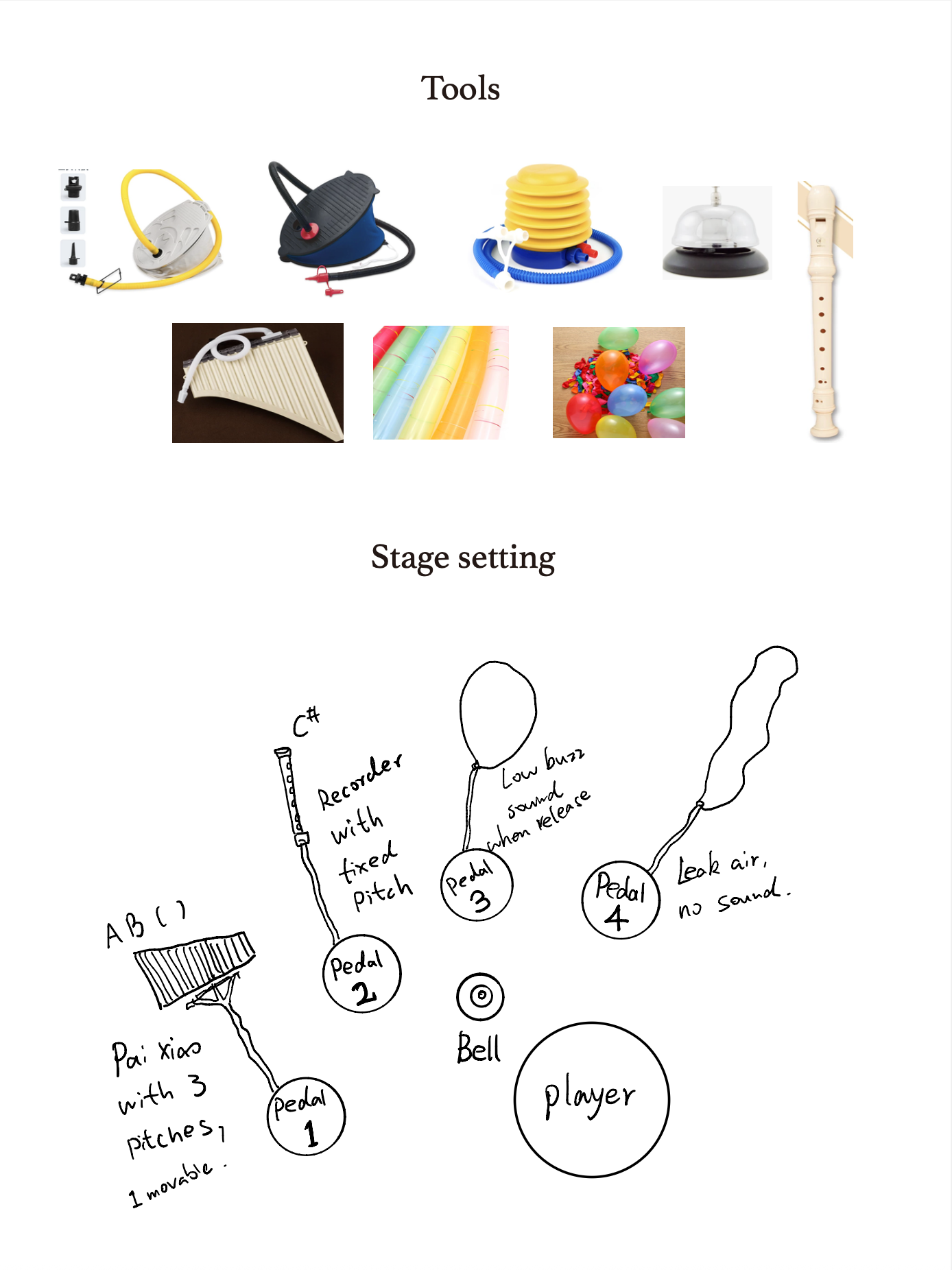
No. 1 and No. 2 are two large air-pressure pedals.
No. 1: The pedal is connected to a Paixiao with two fixed pitches (A and B), while a third pipe produces a movable pitch. An adapter is required to connect the pedal to the air tube leading into the Paixiao, and a piece of rubber is used to stabilize the connection.
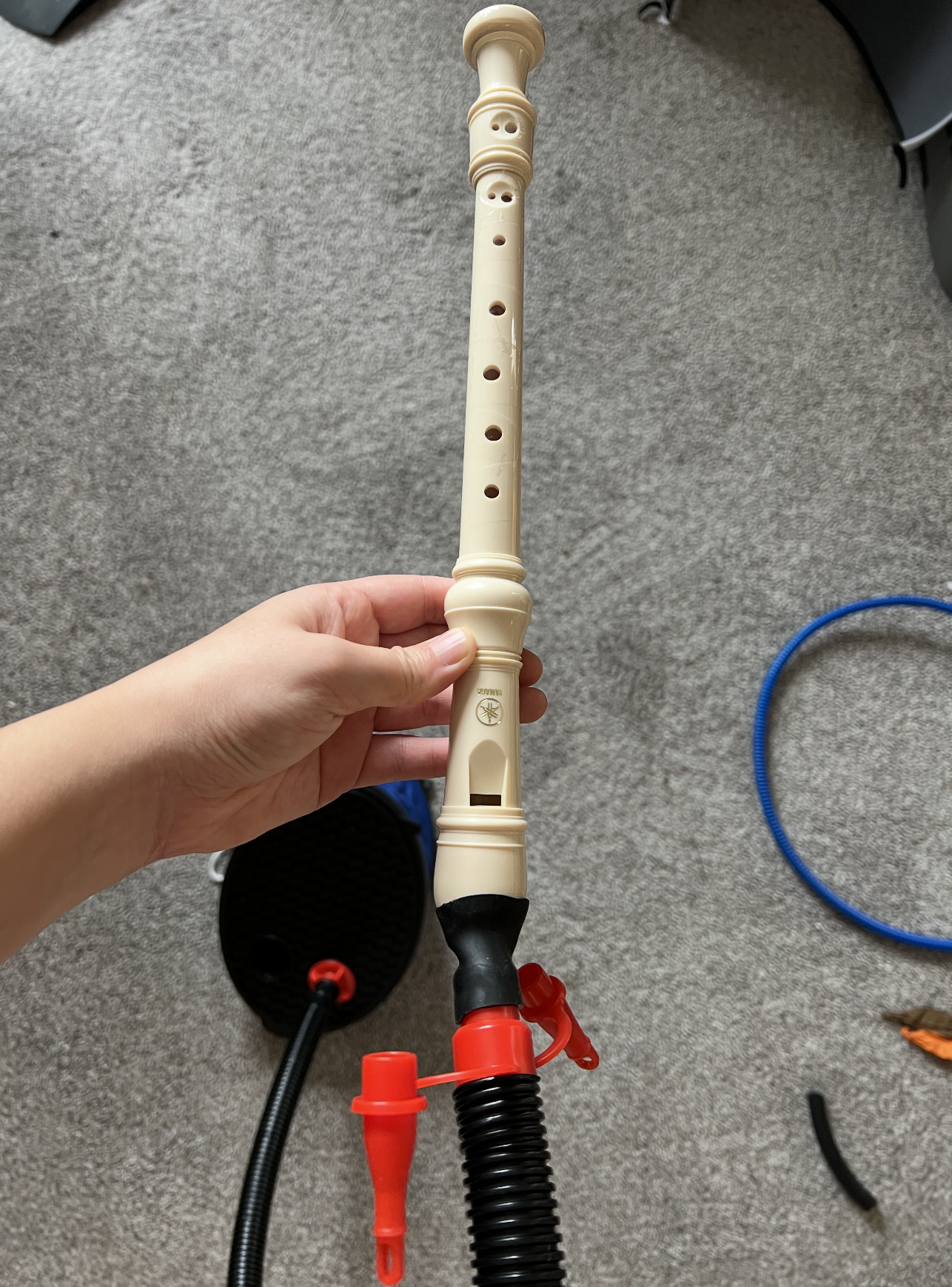
No. 2: The pedal is connected to a soprano recorder whose finger holes are taped to create fixed pitches. Different harmonics are produced by varying the pressure applied to the pedal.
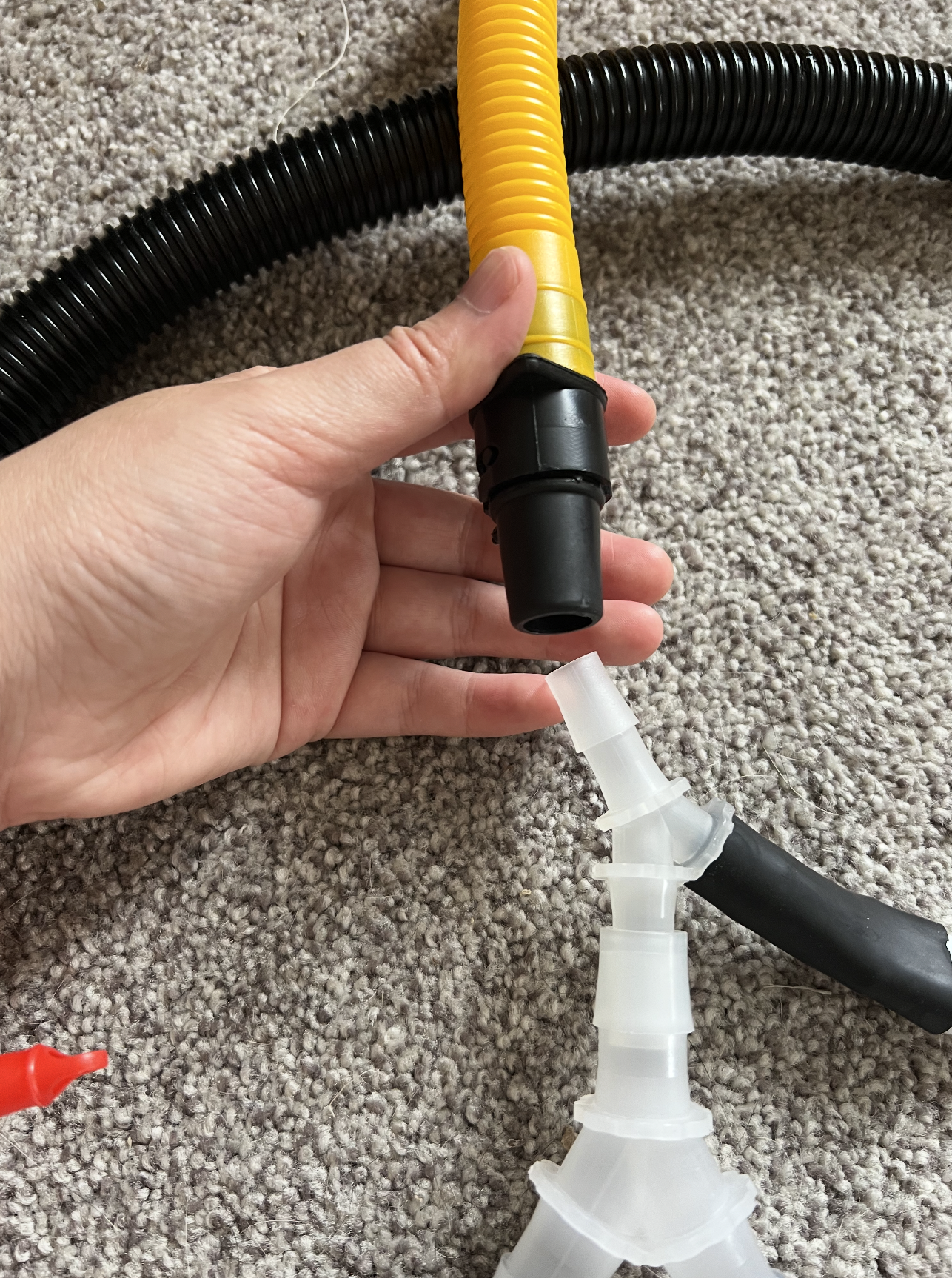
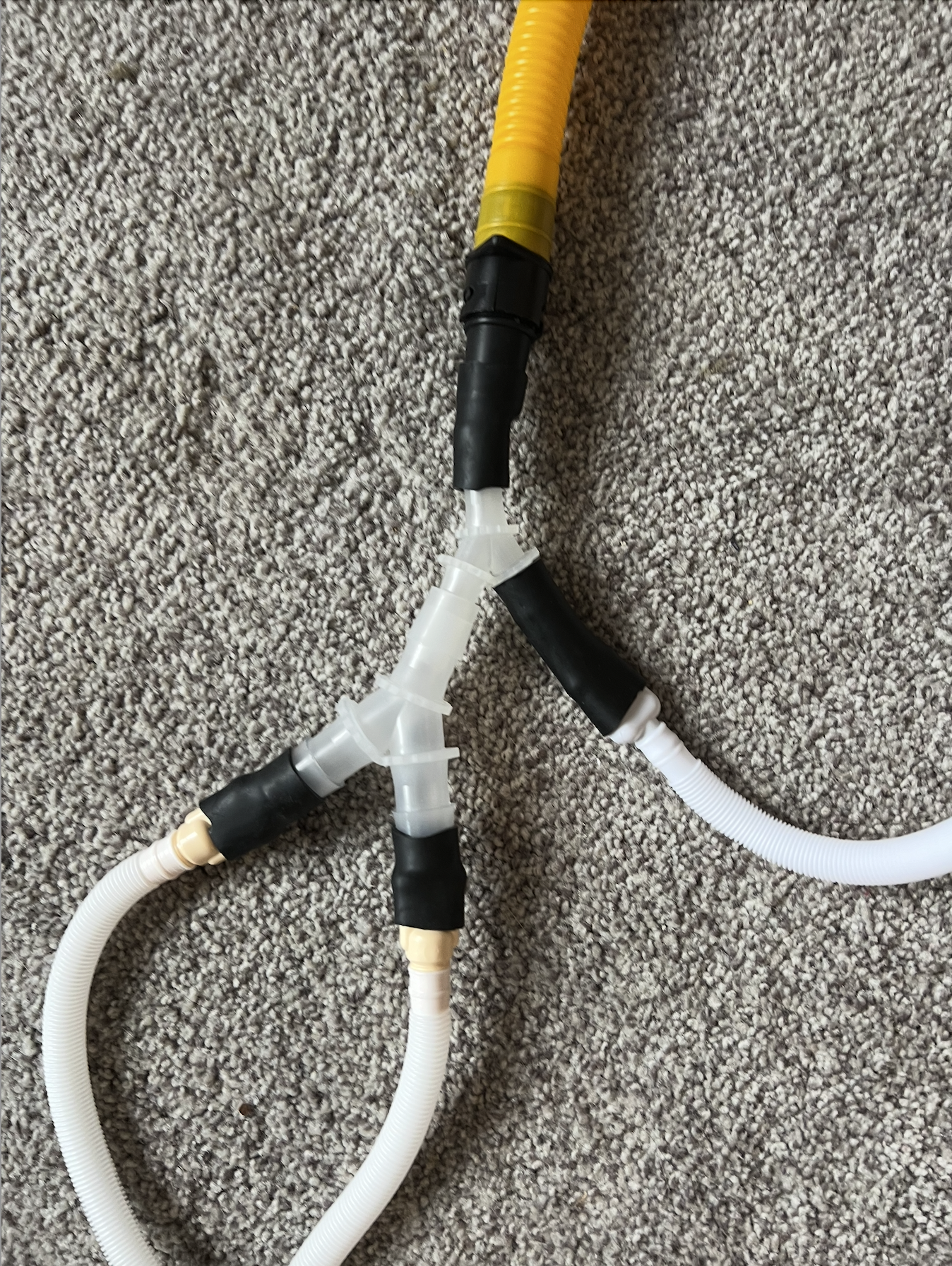
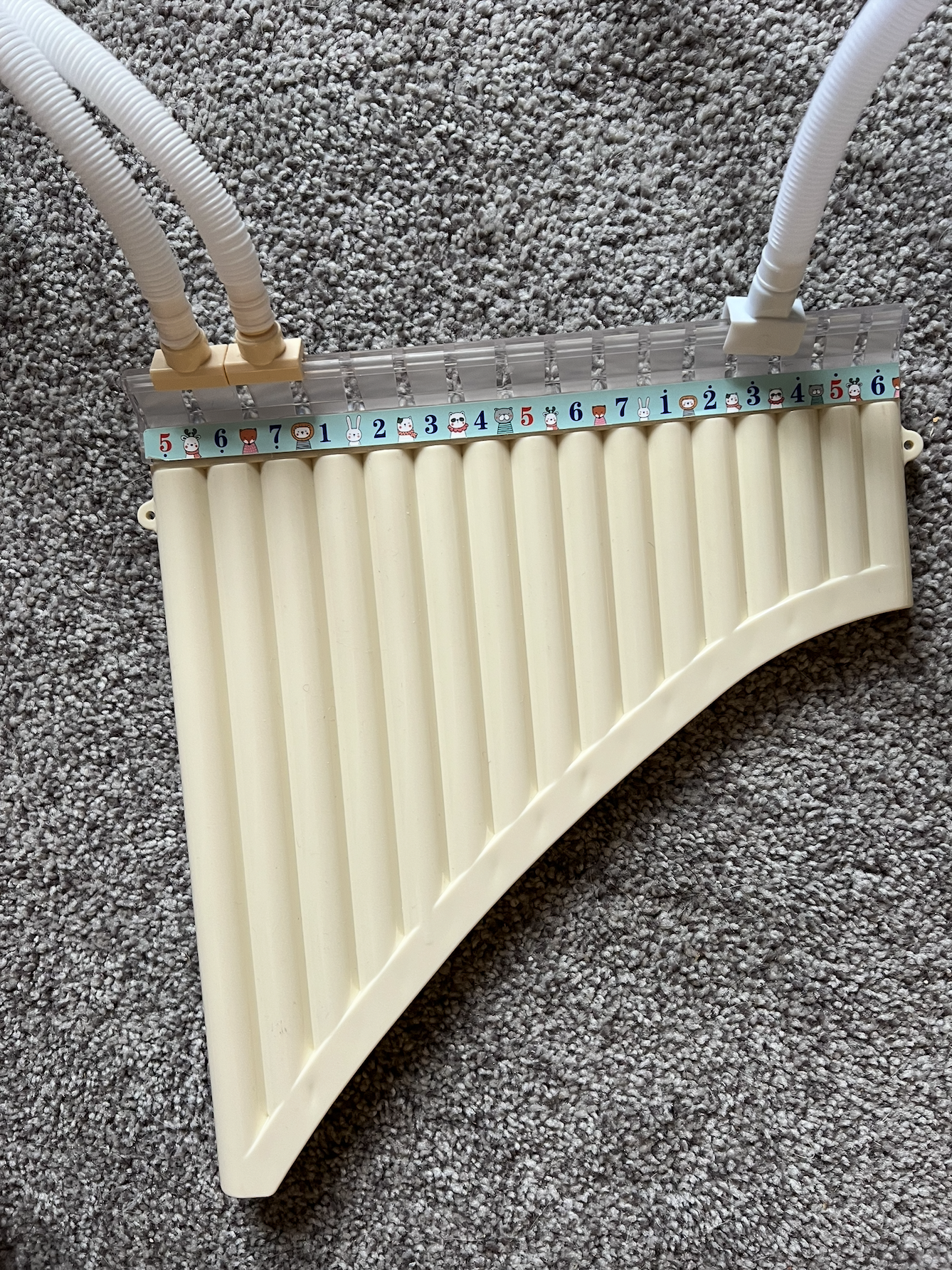
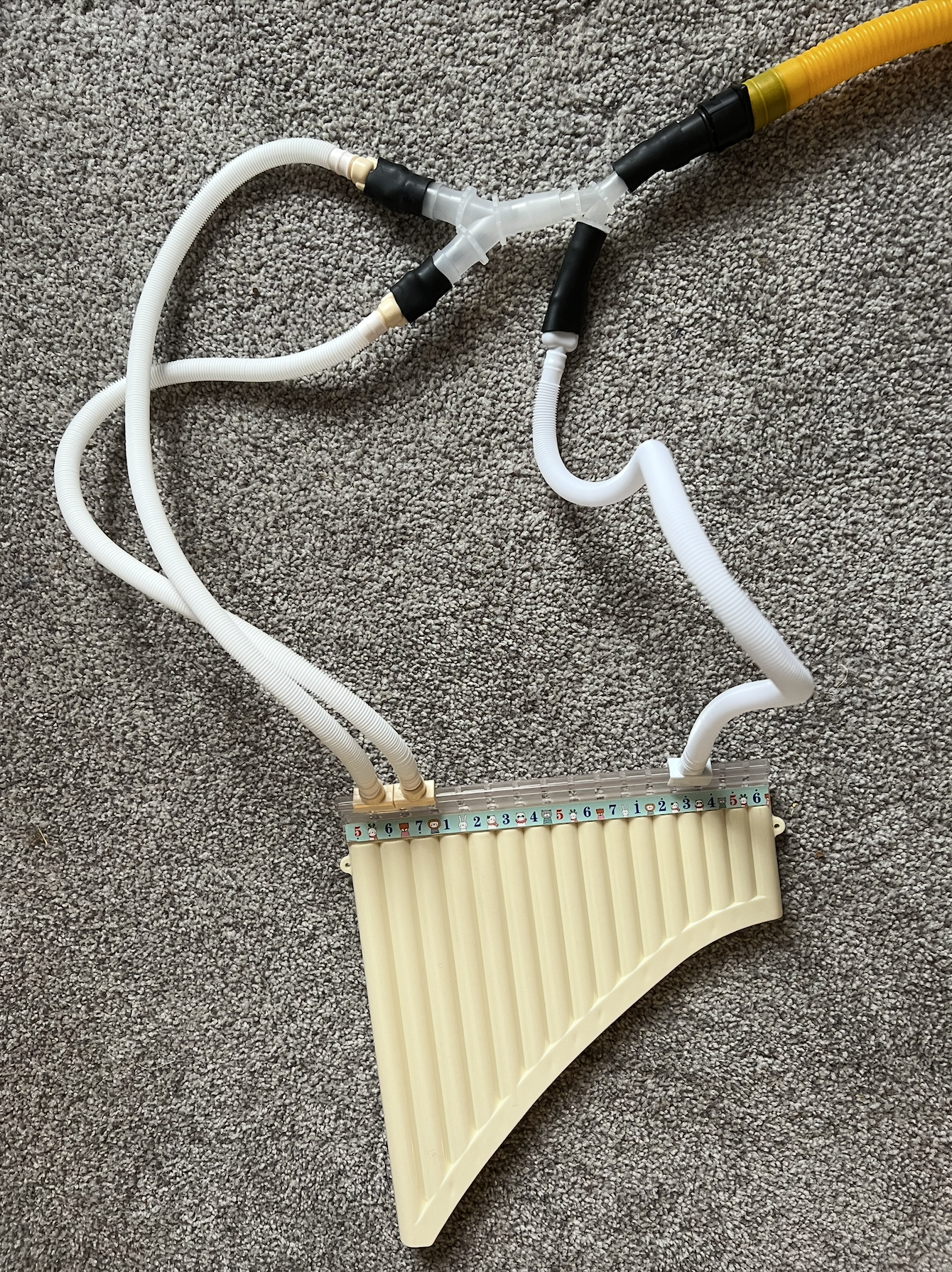
No. 3 and No. 4 are two small air-pressure pedals.
No. 3:
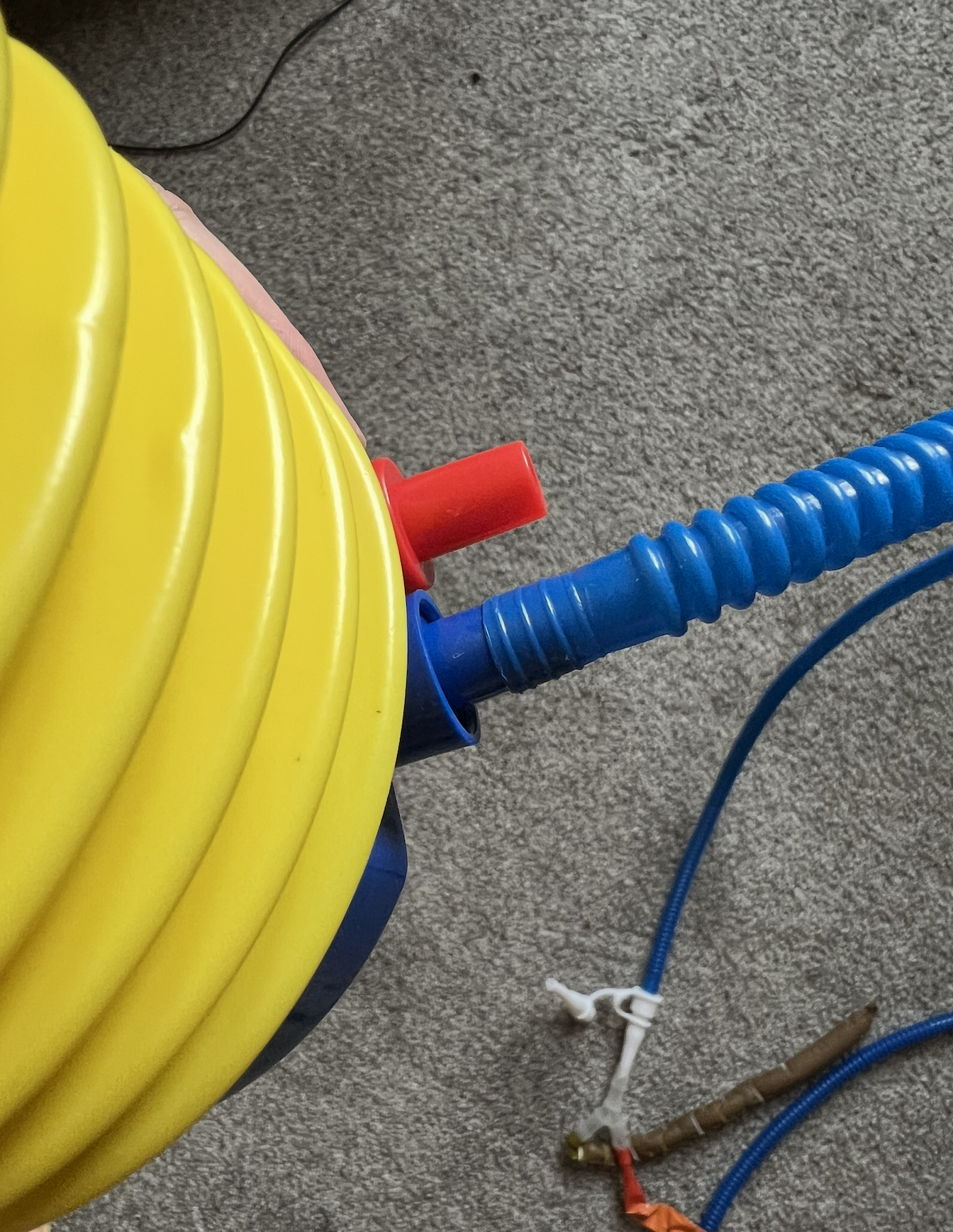
Pedal: This component requires breaking the exit valve first and then reattaching it in a partially unsealed position. This allows the air pressure inside the balloon to leak out slowly, producing a low buzzing sound. It may take multiple attempts and angle adjustments to achieve the desired sound. (Sometimes the sound becomes short and soft; in that case, the balloon needs to be replaced to maintain consistent air pressure.)
Balloon: A round rubber balloon with a relatively thick membrane, capable of holding enough pressure to generate the desired sound.
No. 4:
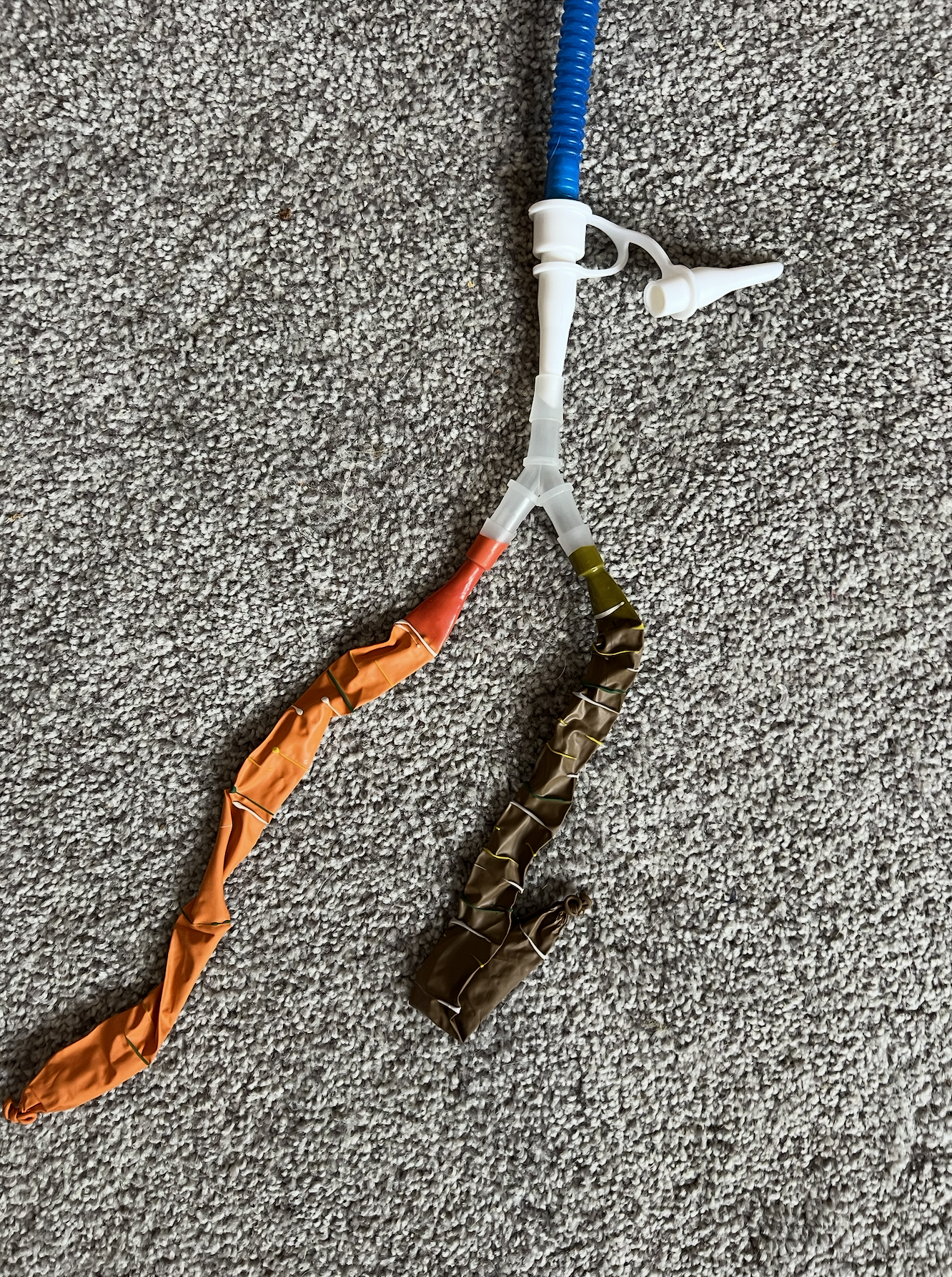
Pedal: The air tube must be slightly broken in a subtle, unnoticeable way and positioned carefully to allow controlled leakage. Adapters are required to connect the pedal to two balloons.
Balloon: Two long balloons with thin membranes.